YOUR PROPULSION EXPERTS

SCHOTTEL has been selected to provide the propulsion package for Bahía Beatriz, an 8,000 DWT hybrid chemical tanker. Specifically designed for bunkering operations and terminal-to-terminal fuel transport, the vessel was built by Spanish shipyard Astilleros de Murueta. Bilbao-based shipowner Mureloil officially launched the vessel in February 2026.
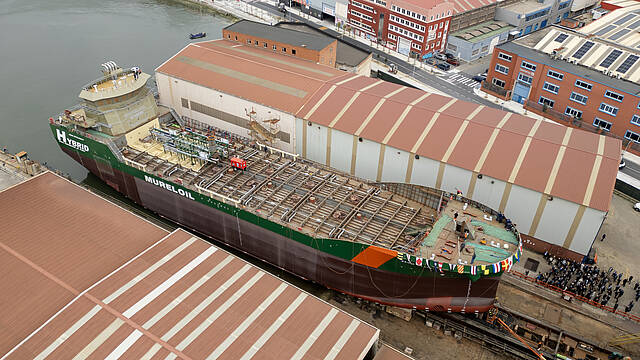
Bahía Beatriz is an 8,000 DWT hybrid chemical tanker, specifically designed for bunkering operations and terminal-to-terminal fuel transport.
The tanker will operate alongside its sister ship Bahía Candela, which is already in service with an identical SCHOTTEL propulsion configuration. Together, both vessels will double Mureloil’s capacity to transport biofuels and methanol.
Jose Luis Caraballo, General Manager at Mureloil, explains: “Choosing azimuth thrusters for a diesel-electric bunker vessel is not just a technical preference – it is a strategic maintenance decision that enhances safety and performance in one of the most demanding maritime operations: ship-to-ship fuel transfer.”
Precise manoeuvrability for safe bunkering operations
To ensure operational efficiency and minimize emissions, Bahía Beatriz utilizes a diesel-electric propulsion system that delivers consistent and dependable performance. For chemical tankers working in close proximity to larger vessels, the ability to maintain precise positioning is crucial – especially during ship-to-ship bunkering operations where accuracy and reliability are essential for safety. The vessel’s propulsion arrangement with two SCHOTTEL RudderPropellers type SRP 360 and one SCHOTTEL TransverseThruster type STT 1 enables exact manoeuvrability even in challenging weather. The redundancy built into the system provides an added layer of security and ensures uninterrupted operation.
Sustainable performance for modern ports
The two vessels are among the first tankers to operate on battery-based diesel-electric power, cutting greenhouse gas emissions by up to 50 percent. This propulsion concept will enable the vessels to run entirely on electricity during port calls, bringing emissions down to zero. For ship owners and operators, this provides an effective way to meet increasingly strict port and regional regulations without compromising range or operational flexibility.